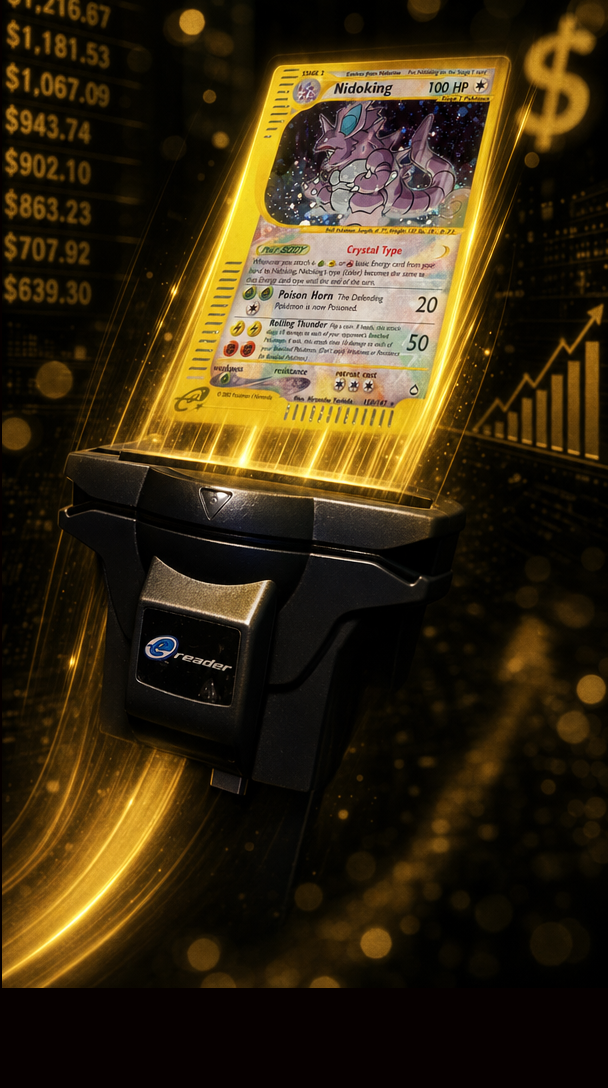
The Pokémon TCG e-Reader and e-Card era (2001–2003) represents one of the most compelling and underexplored segments of the vintage card investment universe. Released across three English sets — Expedition, Aquapolis, and Skyridge — and five Japanese e-Series expansions plus the standalone Web Series, these cards share the lowest combined print runs of the entire Wizards of the Coast (WotC) tenure. That structural scarcity advantage cannot be dissolved by any reprint, reissue, or future set release.
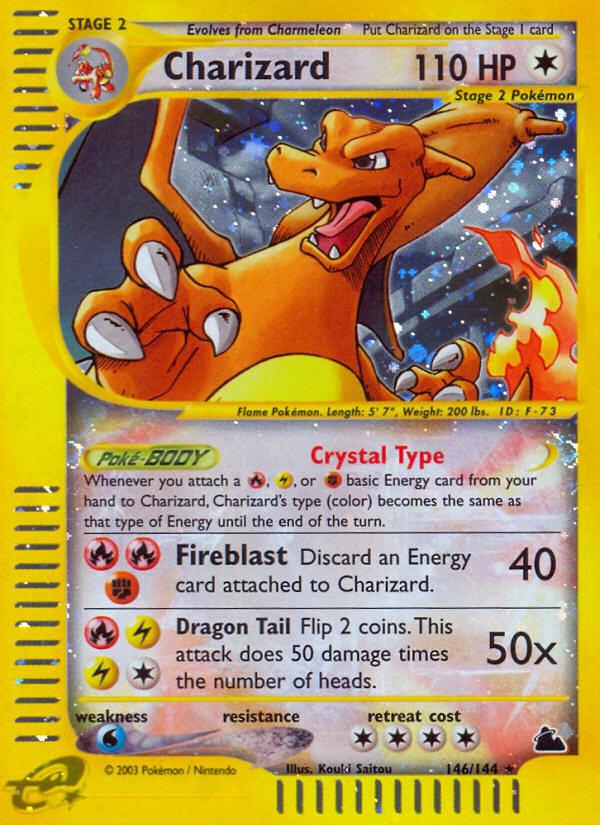
By June 2026, the investment case for e-Reader cards has never been clearer. The Crystal Charizard from Skyridge (#146/144) trades at $79,000 or more in PSA 10 grade, with raw Near Mint copies selling between $4,200 and $7,500. The Japanese Web Series — a 48-card set with no English counterpart distributed exclusively through early Japanese e-commerce — carries some of the lowest PSA population counts in the entire hobby. And the broader market has stabilised: after a 300–600% COVID-era surge and a subsequent 30–40% pullback in 2022–2023, e-Reader prices have established a new, higher floor and entered a fresh appreciation cycle.
This definitive investment intelligence report — compiled from verified marketplace transaction data, PSA population records, collector community analysis, and multi-source price aggregation as of June 1, 2026 — covers every English e-Reader set, every Japanese e-Series expansion, the Crystal-type apex investment class, PSA grading strategy, historical price dynamics, portfolio construction, cross-market arbitrage, and actionable recommendations ranked by conviction level. Whether you are building a Tier 1 trophy position or seeking risk-adjusted growth plays in the $300–$2,000 range, this is the most comprehensive resource available on the e-Reader era investment opportunity.
Report Date: June 1, 2026 | Audience: Experienced TCG Investors | Market Focus: North America + Japan Comparative | Confidence Level: High
What Are e-Reader Cards? The Era Defined
The Pokémon e-Card era was a bold technological experiment by Wizards of the Coast and Nintendo. Every card from this era features a distinctive dot-code strip running along the bottom edge — a sequence of encoded data readable by the Nintendo e-Reader, a Game Boy Advance peripheral accessory. Scanning a card unlocked short animations, Pokédex entries, or mini-games tied to the Pokémon depicted. The hardware flopped commercially: it was never released in Europe and was discontinued in North America by late 2004. But the cards themselves survived as some of the most visually distinctive pieces of the WotC catalogue.
Understanding the physical characteristics of e-Reader cards is essential for investors, because those characteristics directly determine value, grade sensitivity, and authenticity verification.
| Feature | Details |
|---|---|
| Dot-Code Strip | Bottom 15mm strip of encoded data, present on all e-Reader era cards |
| H-Numbered Holos | Separate numbering system (H1/H32, etc.) for holographic rares in Aquapolis and Skyridge |
| Cosmos Holo Pattern | Stars-and-space foil pattern in Aquapolis and Skyridge; Expedition uses a different standard dot-holo |
| Crystal-Type Cards | Unique transparent crystalline overlay on artwork — only in Aquapolis and Skyridge |
| Reverse Holo | Every non-holo card also exists in a reverse-holo (foil background) variant |
| No 1st Edition Stamps (EN) | WotC discontinued 1st Edition stamping after Neo Destiny; all English e-Reader cards are Unlimited |
| Japanese 1st Edition | Japanese e-Series sets DO have 1st Edition distinctions — significant for collectors and investors |
The Print Run Question: What We Know
Precise print-run figures for the e-Reader era have never been officially released by Wizards of the Coast or Nintendo. However, community analysis, PSA population data, and cross-referencing with known industry data points supports a clear hierarchy. By 2017, Pokémon reported cumulative worldwide card shipments of 23.6 billion across all sets. The Pokémon TCG boom peaked around 2001, meaning e-Card sets released in 2002–2003 were printed into a contracting market. Yu-Gi-Oh! had captured significant trading card market share by 2002–2003, and retail shelf space for Pokémon was shrinking, causing Wizards to print far fewer units of Expedition, Aquapolis, and Skyridge than of Base Set, Jungle, or even Neo Genesis.
Skyridge, released May 2003 — literally the month before Nintendo assumed the Pokémon licence — almost certainly had the lowest print run of any WotC main set. PSA population data confirms this: Base Set holo rares (PSA 10) include some cards with 2,000–5,000 PSA 10 copies; Skyridge holo rares (PSA 10) have fewer than 100–300 PSA 10 copies each, and Crystal Charizard has approximately 40–60 PSA 10s in existence across all grading companies. This represents a structural scarcity floor that cannot be replicated or diluted.
Global Market Context: Why Now
The broader Pokémon card market provides a powerful tailwind for e-Reader investment in 2026. The global trading card game market was valued at $15.11 billion in 2026, growing at a CAGR of approximately 10% (Market.us Research, 2026). Pokémon TCG Pocket generated $90.4 million in a single month (February 2025), continuously onboarding new audiences into the Pokémon ecosystem. WotC-era vintage cards (1999–2003) have shown 20–40% compound annual growth rates over multi-year periods post-correction (Bleap Finance, May 2026). PSA processed over 19 million items in 2025, up from 2 million in 2020, demonstrating the maturation of the authentication infrastructure. The Pikachu Illustrator PSA 10 sold for $16.49 million at Goldin Auctions in February 2026, setting psychological ceiling expectations for the entire vintage Pokémon market.
The collector base is also expanding generationally. Millennials — the original Pokémon generation, born 1981–1996 — are now in peak earning years, creating sustained organic demand for the cards they grew up with. e-Reader cards, being the last WotC sets, occupy a powerful nostalgia position for collectors in their late 20s to early 40s. This demand floor is structural and multi-decade in nature.
Expedition Base Set (September 2002): The Entry-Level English e-Reader Investment
Released September 16, 2002, Expedition is the first English e-Reader set and the entry point for investors in this era. The set contains 165 total cards (18 holographic rares, 18 non-holo rares, 90 commons/uncommons, and 39 reverse holos) and was sourced from the Japanese Base Expansion Pack (e1). Its print run is the highest of the three English e-Reader sets — still low by WotC standards overall, but meaningfully more accessible than Aquapolis or Skyridge.
Expedition reset the card numbering to #1/165 after the Neo sets and introduced the Pokémon e-Reader technology to English audiences. The set features dual-version holos: each holo Pokémon appears in both a "Holo" and "Non-Holo" variant, both numbered separately. The holographic treatment uses a distinctive standard dot-holo pattern — not the Cosmos Holo of Aquapolis/Skyridge — making it visually distinct from the later sets. Packs retailed at $3.29, 36 packs per box.
Key Investment Cards: Expedition
| Card | Number | Raw Value | PSA 9 | PSA 10 |
|---|---|---|---|---|
| Charizard (Holo) | H2/165 | $360–$700 | ~$3,127 | ~$28,936 |
| Charizard (Non-Holo) | #40/165 | $100–$200 | ~$500 | ~$2,000 |
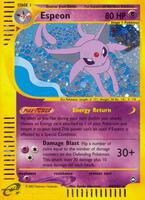
| Espeon (Holo) | H10/165 | ~$250 | ~$900 | ~$4,000+ |
| Blastoise (Holo) | H1/165 | ~$200 | ~$700 | ~$3,500 |
| Umbreon (Holo) | H18/165 | ~$300 | ~$1,200+ | ~$6,000+ |
| Typhlosion (Holo) | H17/165 | ~$150 | ~$600 | ~$2,500 |
| Meganium (Holo) | H10/165 | ~$180 | ~$600 | ~$2,000 |
| Feraligatr (Holo) | H4/165 | ~$100 | ~$400 | ~$1,800 |
The Expedition Charizard: Set Apex and Blue-Chip Entry Point
The Expedition Charizard (Holo, H2/165) is the set's undisputed apex card and the most liquid blue-chip e-Reader card below five figures. Recent verified eBay and TCGPlayer sales (PriceCharting, May 2026) confirm: Raw NM copies are selling at $352–$700, with "Swirl" variants commanding $675–$1,043. PSA 7 examples have sold at $1,344; PSA 8 at $1,440; PSA 9 at $3,127; and PSA 10 at approximately $28,936. You can check current Expedition Charizard listings on eBay or review recent eBay sold prices to benchmark your entry point.
The "Swirl Premium" is a critical investor detail unique to Expedition. Cards with a prominent holo swirl pattern on the artwork command a meaningful premium over non-swirl copies — some swirl variants have listed for $4,999–$5,000 raw. This is not an official variant but an observable printing characteristic that has become a high-demand collector trait. Target swirl copies whenever possible for maximum upside on future sales.
Investment Assessment: Expedition is the entry-level English e-Reader investment. The Charizard is the set's undisputed apex card, offering proven liquidity with a consistent buyer base. PSA 10 populations are higher than Skyridge equivalents, but still low by WotC standards. Best buy: NM-Mint Expedition Charizard targeting PSA 9 submission, or PSA 7–8 copies for budget investors targeting long-term appreciation. The Swirl variant in PSA 9 is the ideal target, with a 5-year price outlook of $40,000–$70,000+. Confidence: High.
Full Expedition Holo Reference (H1–H18)
| # | Card | Raw Value | PSA 9 | Investment Note |
|---|---|---|---|---|
| H1 | Blastoise | ~$200 | ~$700 | Gen 1 starter; consistent demand |
| H2 | Charizard | $360–$700 | ~$3,127 | SET APEX — Swirl premium |
| H3 | Clefable | ~$80 | ~$350 | Lower demand; fairy-type niche |
| H4 | Feraligatr | ~$100 | ~$400 | Gold/Silver starter; undervalued |
| H5 | Gengar | ~$150 | ~$600 | Ghost premium |
| H6 | Golem | ~$75 | ~$250 | Rock-type; lower tier |
| H7 | Gyarados | ~$200 | ~$700 | Strong pull; consistent performer |
| H8 | Jumpluff | ~$80 | ~$300 | Grass niche |
| H9 | Machamp | ~$120 | ~$450 | Fan favourite fighter |
| H10 | Meganium | ~$180 | ~$600 | Johto starter |
| H11 | Moltres | ~$200 | ~$700 | Legendary bird |
| H12 | Nidoking | ~$150 | ~$500 | Strong Poison/Ground |
| H13 | Pichu | ~$100 | ~$400 | Pikachu family premium |
| H14 | Politoed | ~$120 | ~$450 | Frog line |
| H15 | Scizor | ~$100 | ~$350 | Steel-type collector |
| H16 | Slowking | ~$150 | ~$500 | Psychic premium |
| H17 | Typhlosion | ~$150 | ~$600 | Johto starter; undervalued |
| H18 | Umbreon | ~$300 | ~$1,200+ | Eeveelution — high demand |
Aquapolis (January 2003): The Value Tier of the Crystal Era
Released January 15, 2003, Aquapolis is the second English e-Reader set and frequently called the "underappreciated middle child" of the three. It contains 186 total cards (32 H-numbered holographic rares, 44 regular rares, 79 commons/uncommons, and 31 reverse holos), drawn from two Japanese source sets: The Town on No Map (e2, 88 cards) and The Wind from the Sea (e3, 96 cards). Its print run is lower than Expedition's, though not as low as Skyridge's. Packs retailed at the same $3.29 price point.
Aquapolis introduced two critical innovations that define its investment profile. First, the H-Numbered Holo Subset (H1–H32): a dedicated holographic rare subset numbered separately from the main set, using a Cosmos Holo foil treatment — a distinctive stars-and-space pattern visible across the artwork. This was the premium chase tier within the set. Second, the Crystal-Type mechanic appeared for the first time, with Crystal Nidoking (#H17/H32) and Crystal Lugia (#H30/H32) among the chase cards. The Cosmos Holo pattern also makes Aquapolis holos visually distinct from the standard dot-holo of Expedition.
Crystal Cards in Aquapolis
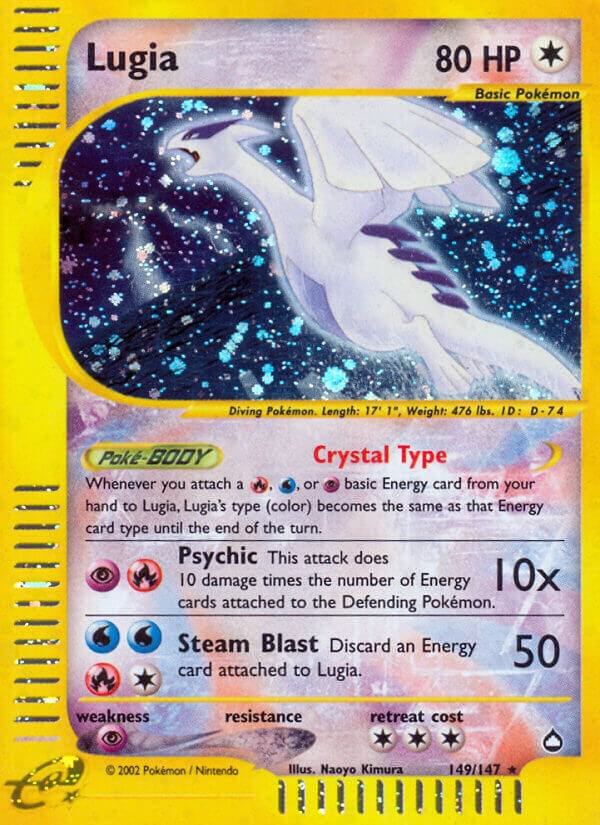
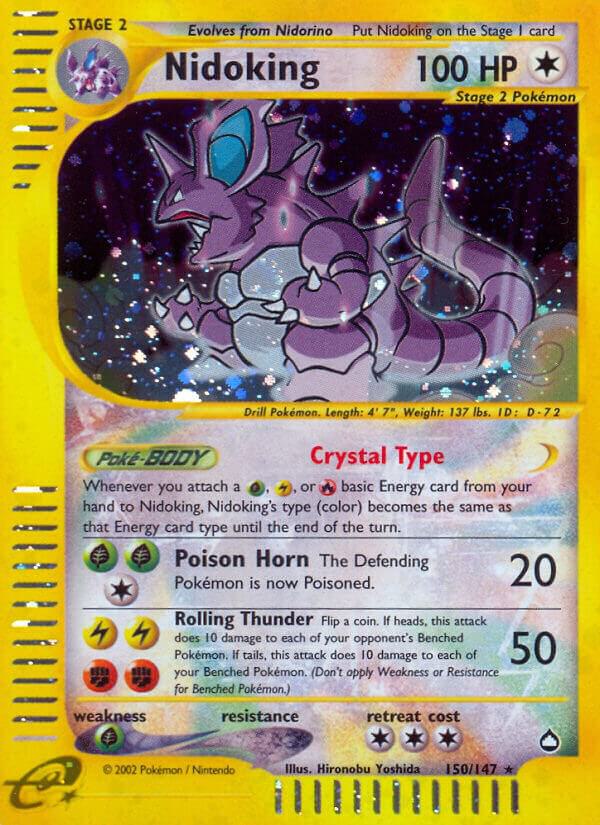
Crystal Lugia (#H30/H32) is the apex card of Aquapolis and one of the most coveted cards in the entire e-Reader universe. Lugia is the most culturally resonant Pokémon from Gold/Silver; its Crystal variant trades at approximately $25,000+ in PSA 10, with raw copies at $1,000–$2,500 depending on condition. PSA 9 examples have sold for approximately $14,000. You can shop Crystal Lugia on eBay or check recent Crystal Lugia sold prices. Crystal Nidoking (#H17/H32) features the same crystalline foil overlay over a Poison/Ground Pokémon that carries strong collector demand; PSA 10 value is approximately $12,000–$15,000+. Find Crystal Nidoking listings on eBay.
Aquapolis Secret Rares (Numbered Above 147/147)
| Card | Number | Raw Value | PSA 10 Approx. |
|---|---|---|---|
| Kingdra | #148/147 | ~$400–$600 | ~$8,000+ |
| Lugia (non-Crystal) | #149/147 | ~$1,000–$2,225 | ~$20,000+ |
| Nidoking (non-Crystal) | #150/147 | ~$350–$600 | ~$6,000+ |
Key H-Numbered Holos: Aquapolis Investment Rankings
| # | Card | Raw Value | PSA 9 | PSA 10 | Investment Note |
|---|---|---|---|---|---|
| H30 | Crystal Lugia | $1,000–$2,225 | ~$14,000 | $25,000+ | CRYSTAL APEX |
| H29 | Umbreon | $800–$1,252 | ~$8,000 | ~$15,000 | TOP BUY — Eeveelution premium |
| H32 | Zapdos | $400–$600 | ~$3,000 | ~$8,000+ | Legendary bird; final H-number |
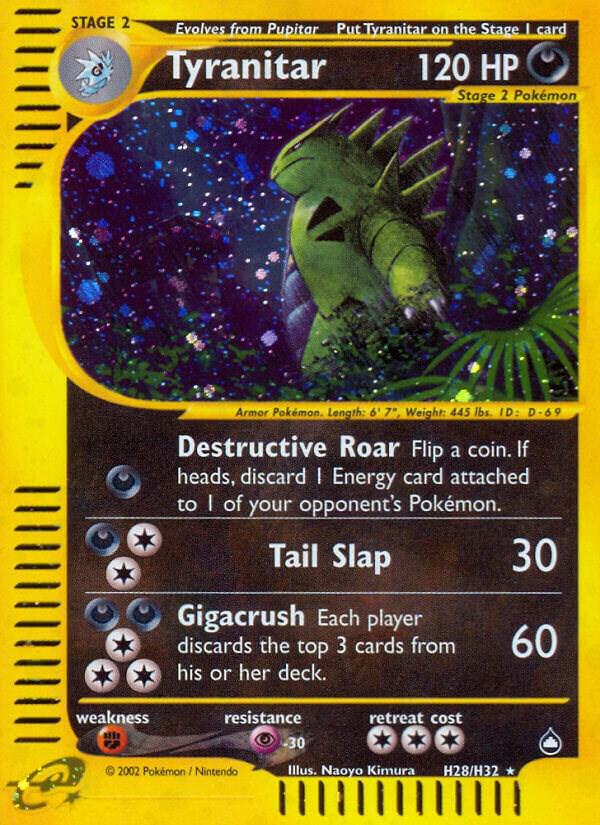
| H28 | Tyranitar | $300–$500 | ~$2,500 | ~$6,000+ | Strong Dark-type chase |
| H17 | Crystal Nidoking | $300–$600 | ~$6,000 | ~$12,000+ | CRYSTAL card |
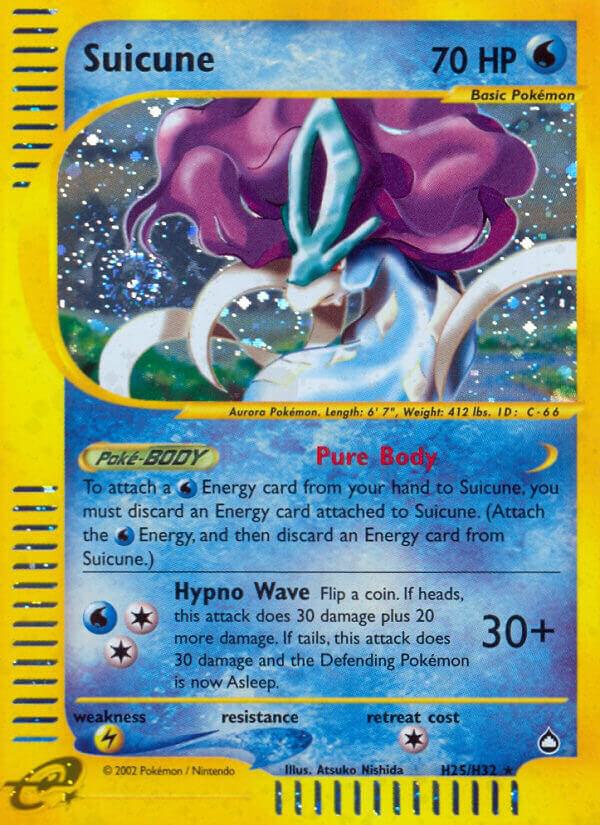
| H25 | Suicune | $200–$450 | ~$1,800 | ~$4,000+ | Legendary dog premium |
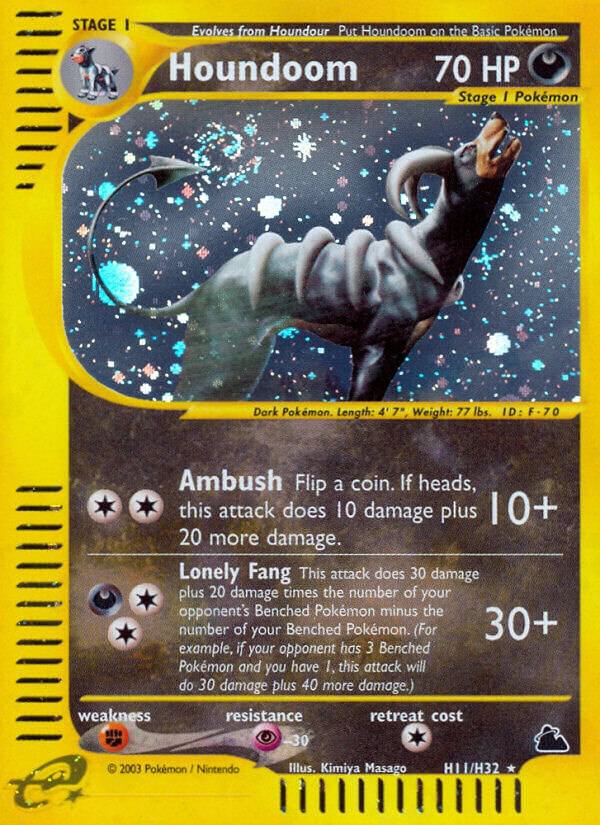
| H11 | Houndoom | $200–$300 | ~$1,400–$1,900 | ~$4,000+ | Fan-favourite Dark-type |
| H2 | Arcanine | $250–$500 | ~$2,000 | ~$5,000+ | Consistent performer; BUY |
| H9 | Espeon | $150–$317 | ~$1,400+ | ~$3,500+ | Eeveelution pair with Umbreon |
| H1 | Ampharos | ~$200 | ~$800 | ~$3,000+ | Electric; Johto fan favourite |
| H8 | Entei | $150–$230 | ~$790+ | ~$3,000+ | Legendary dog |
| H19 | Ninetales | $200–$283 | ~$1,000 | ~$3,500+ | Fire; fox premium |
The highest-conviction Aquapolis buys are Umbreon (H29) and Espeon (H9) as an Eeveelution pair, Tyranitar (H28) for its Dark-type premium, and Arcanine (H2) as a structurally undervalued consistent performer. You can shop Aquapolis Umbreon H29 on eBay and review recent Umbreon Aquapolis sold prices.
Investment Assessment: Aquapolis H-holos in PSA 8 are trading at 50–70% of equivalent Skyridge H-holo prices despite near-identical scarcity dynamics. This is the most underpriced segment of the entire e-Reader universe on a fundamental basis. H-numbered holos in PSA 8–9 represent the best risk-adjusted entry point in the entire e-Reader investment universe. Best buy: H-numbered holos in PSA 8–9, with emphasis on Umbreon H29, Tyranitar H28, Arcanine H2, and the two Crystal cards. Confidence: High.
Skyridge (May 2003): The Crown Jewel of WotC-Era Pokémon
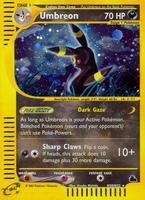
Released May 12, 2003, Skyridge is the final Pokémon set ever published by Wizards of the Coast and the most structurally scarce mainstream WotC release in existence. It contains 182 total cards (32 H-numbered holo rares, 35 regular rares, 82 commons/uncommons, and 34 reverse holos), drawn from Japanese sets Split Earth (e4, 88 cards) and Mysterious Mountains (e5, 88 cards). Its print run is assessed as the lowest of any WotC main set.
Released at the absolute nadir of Pokémon TCG's commercial relevance — when Yu-Gi-Oh! was dominating the market and the Pokémon anime had lost primetime audience share — Skyridge was printed for a market that had largely moved on. Wizards of the Coast was already in the process of losing the licence. The result: conservatively printed boxes went largely unsold or were clearanced out, and far fewer packs were opened than any previous WotC set. Twenty-three years of card degradation, loss, and destruction have further compressed the surviving NM population. The structural math is starkly in collectors' favour.
Crystal Cards in Skyridge: The Apex Tier
| Card | Number | Raw Value | PSA 7 | PSA 9 | PSA 10 | Pop (PSA 10) |
|---|---|---|---|---|---|---|
| Crystal Charizard | #146/144 | $4,200–$7,500 | $9,000–$10,500 | $23,000–$32,000 | $79,000–$100,000+ | ~40–60 |
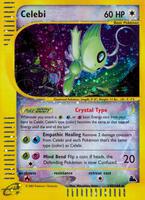
| Crystal Celebi | #145/144 | ~$1,500–$2,000 | ~$4,000 | ~$12,000 | $25,000–$40,000+ | Very low; rarer than Charizard in pop |
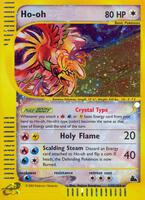
| Crystal Ho-Oh | #149/144 | ~$700–$1,200 | ~$2,500 | ~$7,000 | $15,000–$25,000+ | Low |
A critical note on numbering: the Crystal Charizard is numbered 146/144 — a "secret rare" numbered above the set's stated 144-card total. Collectors should verify: the Crystal Charizard is the gold-text, transparent-art-overlay card at #146/144. It is one of the top 5 most investment-worthy vintage Pokémon cards globally.
You can shop Crystal Charizard Skyridge on eBay or check recent Crystal Charizard sold prices. For Crystal Celebi, shop Crystal Celebi on eBay or view Crystal Celebi recent sold prices. Crystal Ho-Oh listings are available on eBay as well.
Skyridge Secret Rares
| Card | Number | Raw Value | PSA 10 Approx. |
|---|---|---|---|
| Crystal Celebi | #145/144 | ~$1,500–$4,000 | $25,000–$40,000+ |
| Crystal Charizard | #146/144 | $4,200–$7,500 | $79,000–$100,000+ |
| Golem | #148/144 | ~$200–$1,388 | ~$5,000+ |
| Crystal Ho-Oh | #149/144 | ~$600–$800 | ~$15,000+ |
Key H-Numbered Holos: Skyridge (Non-Crystal)
| # | Card | Raw Value | PSA 8 | PSA 9 | PSA 10 | Investment Note |
|---|---|---|---|---|---|---|
| H30 | Umbreon | $2,000–$5,000 | ~$8,000 | ~$15,000+ | $30,000+ | TOP APEX — sleeper grail |
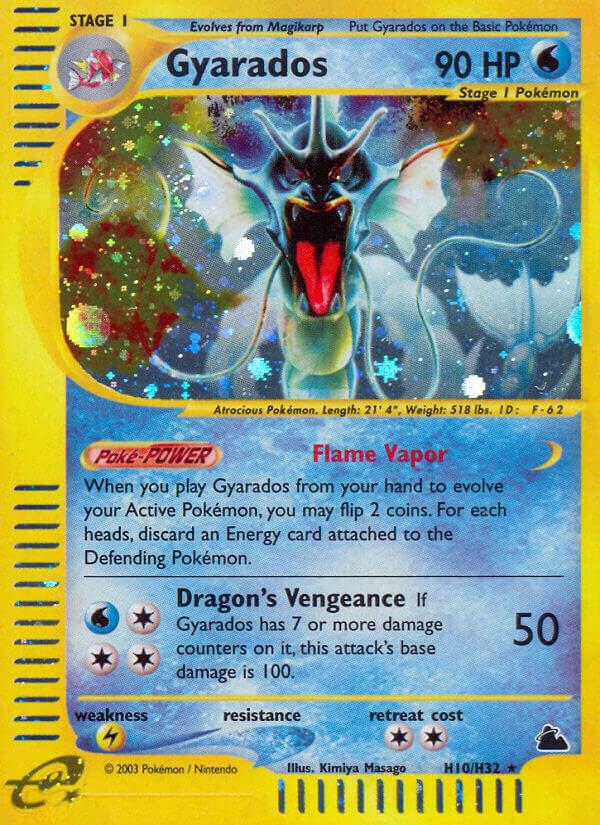
| H10 | Gyarados | $400–$1,250 | ~$3,000 | ~$6,000 | $15,000+ | TOP HOLD |
| H11 | Houndoom | $500–$1,000 | ~$3,500 | ~$7,000 | $18,000+ | Dark premium |
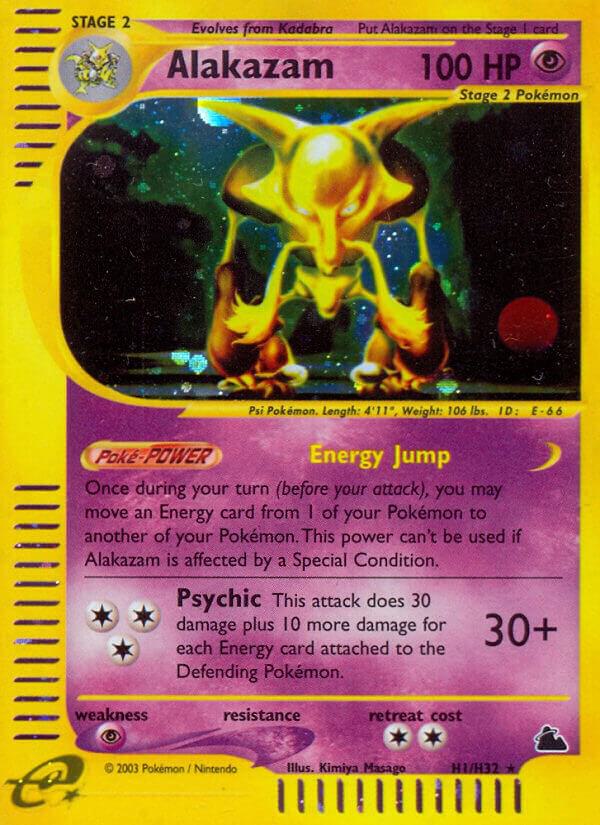
| H1 | Alakazam | $500–$1,200 | ~$3,000 | ~$6,000 | $15,000+ | Psychic GOAT |
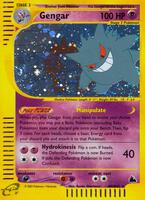
| H9 | Gengar | $400–$700 | ~$2,500 | ~$5,000 | $12,000+ | Ghost GOAT |
| H15 | Machamp | $200–$420 | ~$1,500 | ~$3,500 | $8,000+ | Fighter |
| H23 | Politoed | $300–$450 | ~$2,000 | ~$4,000 | $10,000+ | Water; popular |
| H26 | Raikou | $300–$475 | ~$1,800 | ~$2,800 | $9,000+ | Legendary dog |
| H7 | Flareon | $300–$500 | ~$2,000 | ~$4,000 | $10,000+ | Eeveelution |
| H2 | Arcanine | $400–$500 | ~$2,000 | ~$3,500 | $10,000+ | Fire; undervalued |
| H31 | Vaporeon | $250–$350 | ~$1,500 | ~$2,000 | $8,000+ | Eeveelution |
| H20 | Moltres | $250–$338 | ~$1,500 | ~$2,000 | $7,000+ | Legendary bird |
The Skyridge Umbreon (H30) is what the report identifies as the single highest-appreciation-potential non-Crystal holo in the entire e-Reader universe. At a PSA 8 raw cost of approximately $8,000 and a PSA 10 value of $30,000+, the grade premium is exceptional. You can shop Umbreon Skyridge H30 on eBay and review recent Umbreon Skyridge sold prices. Gengar (H9) also commands strong demand given its Ghost-type cultural premium; find Gengar Skyridge on eBay.
Investment Assessment: Skyridge is the prestige investment tier of the entire e-Reader universe. Crystal Charizard is the undisputed grail. Umbreon H30 is the sleeper with the highest appreciation potential among non-Crystal holos. Any PSA-certified Skyridge H-holo at PSA 7+ represents a hard-asset, low-liquidity investment for 5–10 year horizons. Confidence: High.
Crystal-Type Cards: The Apex Investment Class of the e-Reader Era
Crystal-Type Pokémon represent the absolute pinnacle of e-Reader era collecting and investment. They exist in no other era of the Pokémon TCG, cannot be replicated, and occupy a unique visual and historical position in the hobby. Understanding why Crystal cards command such premium multiples is essential before allocating capital.
What Are Crystal-Type Cards?
Crystal-Type cards feature a transparent crystalline overlay across the central artwork — a unique foil printing technique that creates the illusion of the Pokémon being seen through a crystal lattice. The foil extends across the entire card face including the artwork window, which is structurally different from standard holo, reverse holo, or Cosmos Holo treatments. Only five English Crystal cards exist across the entire e-Reader era:
| Crystal Card | Set | Card # | Pokémon Type | PSA 10 Value |
|---|---|---|---|---|
| Crystal Nidoking | Aquapolis | #H17/H32 | Poison/Ground | ~$12,000–$15,000+ |
| Crystal Lugia | Aquapolis | #H30/H32 | Flying/Psychic | ~$25,000+ |
| Crystal Charizard | Skyridge | #146/144 | Fire/Flying | $79,000–$100,000+ (APEX) |
| Crystal Celebi | Skyridge | #145/144 | Psychic/Grass | $25,000–$40,000+ |
| Crystal Ho-Oh | Skyridge | #149/144 | Fire/Flying | $15,000–$25,000+ |
The Full PSA Grade Value Ladder for Crystal Cards (2026)
| PSA Grade | Crystal Charizard | Crystal Celebi | Crystal Lugia |
|---|---|---|---|
| Raw NM | $4,200 avg | ~$1,500–$2,000 | ~$1,000–$2,500 |
| PSA 1–6 (Poor–EX) | $1,500–$6,000 | — | — |
| PSA 7 | $9,000–$10,500 | ~$4,000 | ~$5,000 |
| PSA 8 | $11,500–$13,000 | ~$6,000 | ~$8,000 |
| PSA 9 | $23,000–$32,000 | ~$12,000 (sold $8K April 2025) | ~$14,000 |
| PSA 10 | $79,000–$100,000+ | $25,000–$40,000+ | ~$25,000+ |
Why Crystal Cards Command Premium Multiples: Five Structural Factors
- Zero reprint risk: The Crystal printing technology was discontinued in 2003. These five cards will never be reprinted in Crystal format. The supply is permanently fixed and declining due to condition attrition.
- Condition attrition accelerating: Crystal cards are particularly vulnerable to surface micro-scratches because the foil overlay covers the full card face. Every card that gets handled damages the Crystal surface, progressively reducing the NM+ population over time — the very opposite of how supply expands for modern cards.
- PSA 10 extreme scarcity: Crystal Charizard is estimated to have approximately 40–60 PSA 10 copies in existence across all grading companies. Against a global collector base of millions, this creates a structural supply ceiling with only one direction.
- The landmark piece premium: Crystal Charizard has become a recognized cultural landmark within the hobby — comparable in prestige to 1st Edition Base Set Charizard, though from a different era. As the hobby matures into a recognized alternative asset class, landmark pieces command premiums that scale non-linearly with grade.
- Pop Report dynamics: Because so few Crystal cards existed in circulation, PSA grading submissions are extremely slow-moving. The PSA 10 population has barely grown in recent years despite increased overall submission volumes, because the raw supply is simply not available to submit.
Grading Challenges Specific to Crystal Cards
Crystal cards present unique grading challenges that every investor must understand before purchasing raw copies:
- Surface sensitivity: The crystal foil is the most damage-prone surface in the entire Pokémon TCG. Even light sleeve friction can create micro-scratches that eliminate PSA 10 candidacy.
- Centering requirements: PSA 10 requires 55/45 centering or better. Crystal cards from the Skyridge era frequently exhibit off-centering from the printing process, making PSA 10s especially scarce.
- Holo cracking: The crystal foil can exhibit fine cracks from temperature and humidity changes over 20+ years of age. Cards stored in dry or fluctuating environments are at elevated risk.
- Light exposure: The transparent crystal overlay fades under UV exposure over time. Cards stored in direct light show visible fading that lowers grades significantly.
Pre-submission best practices for Crystal cards: Use UV-protective storage cases and keep away from natural light sources. Inspect under a 10x loupe before submission — surface wear invisible to the naked eye will show under loupe and will likely reduce grade. Use PSA Super Express ($299) or Walk-Through ($599) service given the card values; the incremental cost is trivial against the $20,000+ gap between PSA 9 and PSA 10.
Japanese e-Series Sets: The Deep Dive and Cross-Market Arbitrage
The Japanese e-Series comprises five main expansion sets (e1–e5) plus the standalone Web Series and several promotional runs. These sets predated their English counterparts by 3–9 months and differ significantly in card count, rarity structure, and investment profile. Understanding the structural differences is essential before investing in Japanese e-Series cards.
Key Structural Differences: Japanese vs. English e-Series
| Feature | English (Expedition/Aquapolis/Skyridge) | Japanese e-Series (e1–e5 + Web) |
|---|---|---|
| 1st Edition Distinction | None (all cards Unlimited) | YES — 1st Edition exists on booster boxes / card backs in select sets |
| Card Count per Set | 165–186 | 48–128 |
| Pull Rate Density | Holos ~1 per 3 packs | Holos more frequent (smaller sets, denser holo distribution) |
| Holo Pattern | Cosmos Holo (Aquapolis/Skyridge) | Japanese-specific holo treatment; often described as brighter/more vivid |
| Print Run | Low (WotC era) | Lower absolute number (Japan-only distribution) |
| PSA Grading Challenges | Standard English print quality | Japanese cards prone to surface scratches; printing marks more visible; harder to achieve PSA 10 |
| Price Premium vs. English | N/A | Often 10–40% discount for equivalent characters — a cross-market opportunity |
| First Edition Premium | N/A | 2–5x premium over unlimited for rare holos |
Japanese Base Expansion Pack (e1) — December 2001
The Japanese Base Expansion Pack (e1), released December 14, 2001, is the foundation of e-Card era Japanese investment. It contains 128 cards including the full e-Reader treatment of Gen 1 and early Gen 2 Pokémon — Charizard, Blastoise, Venusaur, Pikachu, and Mewtwo — all of which have PSA 10 values ranging from $3,888 to $24,242. Critically, unlike the English Expedition, the JP Base Expansion Pack carries 1st Edition distinctions, adding a scarcity layer absent from any English e-Reader set.
| Card | EN Equivalent | Ungraded | PSA 9 | PSA 10 | 1st Ed Premium |
|---|---|---|---|---|---|
| Charizard (Holo) #6 | Exp. Charizard | ~$265 | ~$2,960 | ~$24,242 | +40–60% |
| Blastoise (Holo) #9 | Exp. Blastoise | ~$67 | ~$626 | ~$5,557 | +30–50% |
| Mewtwo #150 | Exp. Mewtwo | ~$50 | ~$547 | ~$6,201 | +30–40% |
| Pikachu #25 | Exp. Pikachu | ~$16 | ~$370 | ~$4,909 | High (cultural) |
| Venusaur #3 | Exp. Venusaur | ~$53 | ~$533 | ~$3,888 | +25–40% |
The JP Base Expansion Charizard PSA 10 at approximately $24,242 represents significant upside relative to its English Expedition Charizard counterpart (~$28,900 PSA 10), especially given the lower absolute population counts in Japanese. The 1st Edition premium adds a scarcity layer that English Expedition lacks entirely. Confidence: High.
Japanese e-Series e2–e5 Overview
| Set | Release | Cards | Key Cards | EN Source |
|---|---|---|---|---|
| Town on No Map (e2) | Mar 2002 | 88 | Umbreon, Espeon, Houndoom | Aquapolis (Part 1) |
| Wind from the Sea (e3) | Jul 2002 | 96 | Lugia, Tyranitar, Suicune | Aquapolis (Part 2) |
| Split Earth (e4) | Aug 2002 | 88 | Ho-Oh, Crystal cards begin | Skyridge (Part 1) |
| Mysterious Mountains (e5) | Nov 2002 | 88 | Celebi, Crystal Charizard | Skyridge (Part 2) |
The Japanese versions of Aquapolis- and Skyridge-equivalent cards trade at a consistent 15–30% discount to their English counterparts despite lower absolute card populations. This is primarily a market knowledge gap: Western collectors default to English cards, and Japanese e-Series sets are less well-known. Crystal-type cards in Japanese e4/e5 carry the same artwork as the English versions but with the Japanese card back and text. PSA 10 populations for Japanese Crystal Charizard (e5) are believed to be even lower than English Skyridge Crystal Charizard PSA 10s, but pricing has not yet caught up — making this the arbitrage play of the decade within e-Reader investing.
Cross-Market Arbitrage: Japan vs. English (June 2026)
| Card | EN Price (PSA 9) | JP Price (PSA 9 1st Ed) | Discount | Opportunity |
|---|---|---|---|---|
| Charizard Holo | ~$3,127 (Expedition) | ~$2,960 (e1 Base Exp.) | ~5% | Near parity; JP 1st Ed upside |
| Umbreon Holo | ~$8,000 (Aquapolis) | ~$4,000–$6,000 (e2 est.) | ~30% | Strong JP buy |
| Espeon Holo | ~$1,400 (Aquapolis) | ~$1,000–$1,200 (e2 est.) | ~15% | Moderate JP buy |
| Crystal Charizard | $23,000–$32,000 (Skyridge) | ~$15,000–$20,000 (e5 JP) | ~25–35% | Strong JP buy |
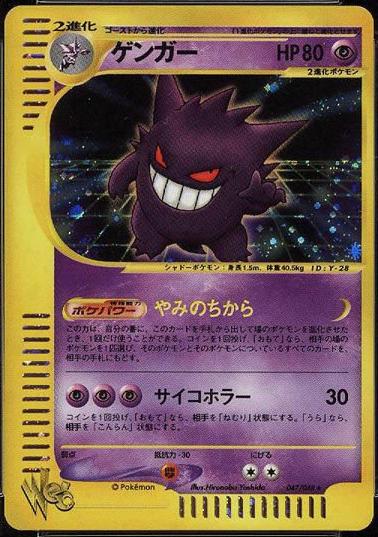
| Gengar Holo | ~$1,500 (Skyridge est.) | ~$13,000+ (Web) | Web is premium | Unique card — no EN counterpart |
To execute the arbitrage: source Japanese e-Series cards through Mercari JP, Yahoo Auctions Japan, TCG Republic, and specialized dealers. Obtain at minimum NM condition (Japanese card standards use S/A/B/C rank on most platforms). Submit to PSA via standard submission process (international cards are fully accepted). Hold or sell into the Western market via eBay or PWCC once graded. Key risks include the subjectivity of Japanese NM grading, the fact that 1st Edition distinction in Japanese e-Series requires authentication via box/pack date codes rather than card stamps, international shipping costs and insurance complexity, and a shrinking but still present Western buyer preference for English-back cards.
Japanese Web Series: The Crown Jewel of Japanese e-Card Investment
The Japanese Web Series is arguably the most structurally scarce Pokémon set ever released with a retail price point. Released October 19, 2001, it contains just 48 cards distributed exclusively through the then-nascent Pokémon official Japanese online store — not through traditional retail channels. This distribution model means the total number of packs produced was limited not by strategic conservatism but by the size of an early-2000s Japanese e-commerce customer base, which was dramatically smaller than any retail channel. The set has no English counterpart whatsoever, meaning Western collectors who want these cards must engage with the Japanese market.
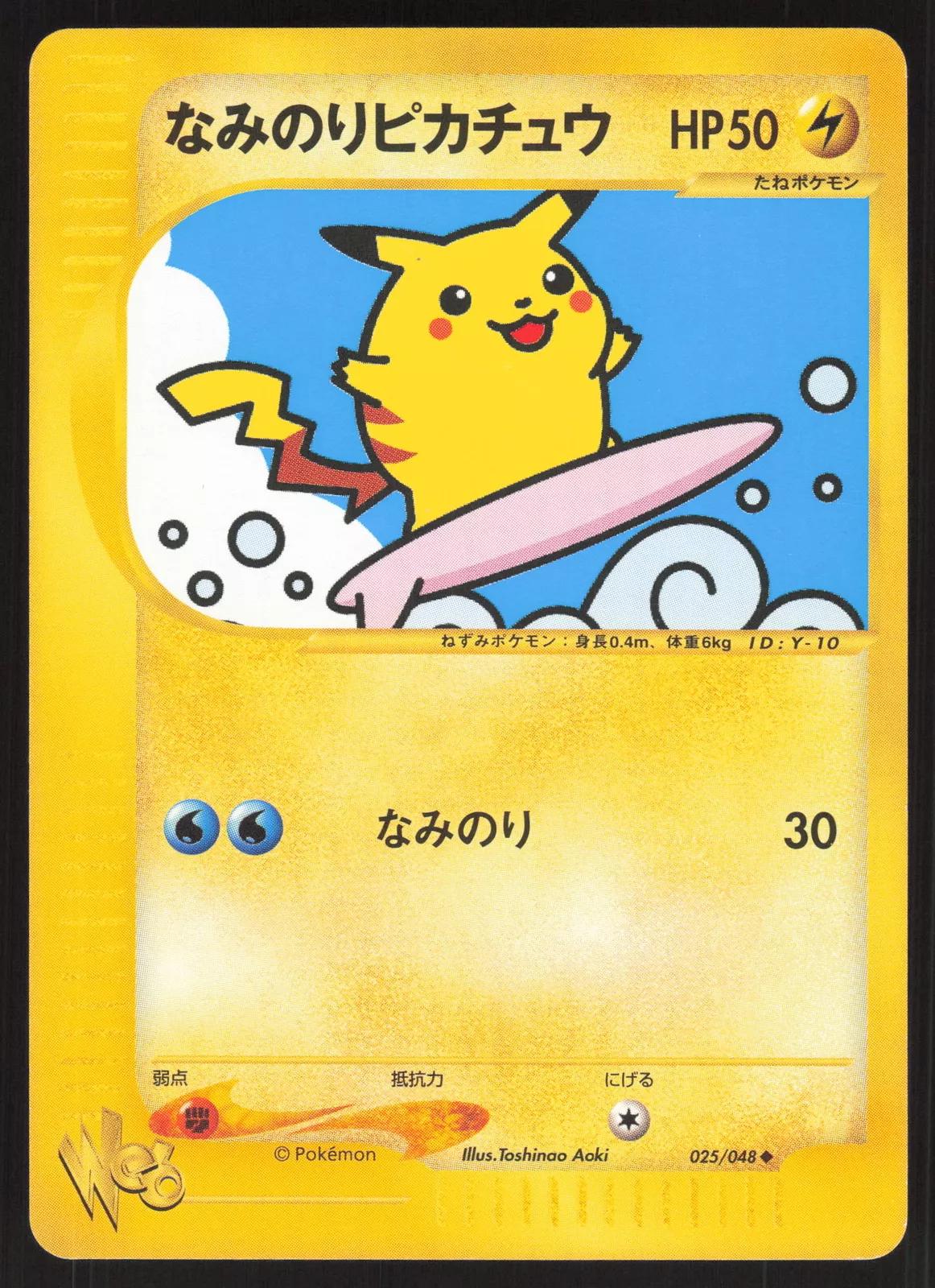
A sealed booster pack from the Web Series currently trades at approximately $2,580 as of June 2026 — a striking data point that illustrates just how scarce this sealed product has become. The set contains holos including Gengar, Moltres, Zapdos, Articuno, Dark Charizard, Dark Blastoise, Dark Venusaur, and Machamp, plus notable non-holos including the iconic Surfing Pikachu and Magikarp — creating an exceptionally high holo density within just 48 cards. The edition structure (1st Edition and Unlimited) adds a further investment dimension absent from all English e-Reader sets.
Complete Web Series Key Card Values (PSA, 2026)
| Card | # | Type | Ungraded | PSA 9 | PSA 10 | 1st Ed PSA 10 |
|---|---|---|---|---|---|---|
| Gengar (Holo) | #47/48 | Holo | $1,675 | ~$13,000 | ~$14,675 | ~$14,900 |
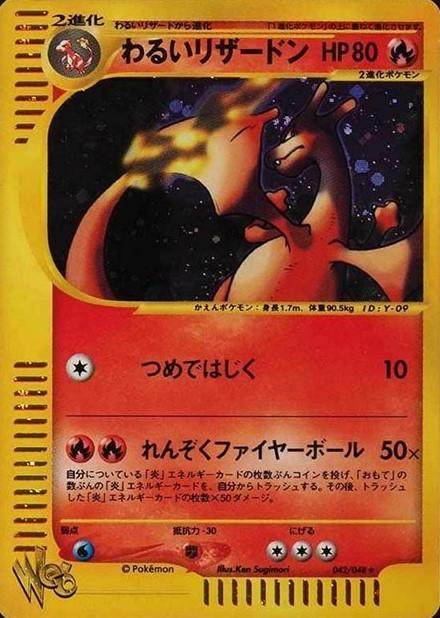
| Dark Charizard | #42/48 | Holo | ~$575 | ~$3,800 | ~$7,950 | ~$6,584 |
| Dark Blastoise | #44/48 | Holo | ~$479 | ~$1,720 | ~$1,683–$3,655 | ~$3,654 |
| Dark Venusaur | #41/48 | Holo | ~$226 | ~$437 | ~$1,100 | Similar |
| Moltres | #43/48 | Holo | ~$165 | ~$218 | ~$430 | Similar |
| Zapdos | #46/48 | Holo | ~$232 | ~$500 | ~$600 | ~$1,000 |
| Articuno | #45/48 | Holo | ~$208 | ~$265 | ~$500–$576 | ~$576 |
| Machamp | #48/48 | Holo | ~$294 | ~$462 | ~$1,000 | ~$1,208 |
| Dragonite | #38/48 | Holo | ~$190 | ~$153 | ~$1,047 | ~$1,407 |
| Surfing Pikachu | #25/48 | Non-Holo | ~$105 | ~$125 | ~$810 | ~$2,903 |
| Magikarp | #35/48 | Non-Holo | ~$500 | ~$385 | ~$1,397 | ~$3,110 |
| Dark Chameleon | #22/48 | Uncommon | ~$57 | ~$239 | ~$287–$410 | High |
| Team Rocket's Meowth | #39/48 | Rare | ~$68–$435 | ~$337 | ~$350 | Very high demand |
The Gengar Thesis: Best Risk-Adjusted Investment in Japanese e-Reader
Web Series Gengar (Holo, #47/48) is arguably the single best investment in the entire Japanese e-Reader space on a risk-adjusted basis. Its PSA 10 raw price of approximately $14,675 is accessible compared to Crystal Charizard but occupies a similarly irreplaceable position — there is simply no other Web Series Gengar, no English version, no reprint, no alternative. You can shop Web Series Gengar on eBay or check recent Web Series Gengar sold prices.
A critical structural mispricing: the 1st Edition PSA 10 (~$14,900) is essentially the same price as the Unlimited PSA 10 (~$14,675), suggesting the edition premium has not been fully priced in. Ghost-types, and Gengar in particular, have among the highest appreciation trajectories in the modern Pokémon collecting market, with alt-art Gengar and EX Shadow/Ultra Rare variants consistently outperforming comparable Pokémon. This suggests sustained cultural demand that will reward long-term holders.
Dark Charizard (#42/48) is the second strongest Web Series play at approximately $7,950 PSA 10 — offering Charizard exposure within the Web Series at a fraction of the Crystal Charizard entry cost. You can find Dark Charizard Web Series on eBay and check recent Dark Charizard Web Series sold prices.
Surfing Pikachu (#25/48) and Magikarp (#35/48) in 1st Edition are cultural icon plays within the set. Surfing Pikachu 1st Edition PSA 10 at approximately $2,903 is modest entry for a card celebrating one of Pokémon's most enduring alternative art motifs. Magikarp 1st Edition PSA 10 at approximately $3,110 is accessible for a card that combines extreme rarity with fan affection and the iconic "underdog" narrative. You can shop Surfing Pikachu Web Series on eBay.
Investment Assessment: The Web Series is the highest-risk, highest-reward Japanese e-Reader play. Thin liquidity (few buyers at high prices), Japanese-language-only cards (some Western buyers apply a discount), and the absence of an English counterpart create both the risk and the opportunity. For investors with access to Japanese market networks or willing to exercise patience, Web Series represents a compelling 5–10 year hold. 5-year PSA 10 target for Gengar: $25,000–$50,000+. Confidence: Medium-High.
Historical Price Analysis: Four Market Phases, 2002 to 2026
The e-Reader era has undergone four distinct market phases since its original release. Understanding each phase is essential for contextualizing current prices and forward opportunity.
Phase 1: Dormancy (2003–2019)
Following the transition from WotC to Nintendo in 2003 and the subsequent decline of the original Pokémon TCG era in collector consciousness, e-Reader cards were largely ignored. The sets were seen as "the end of WotC" — nostalgic but not actively collected. Cards could be found at flea markets for cover price or below. A PSA 10 Skyridge Crystal Charizard, to the extent one existed in a collector's binder, would have traded for hundreds of dollars, not tens of thousands. During this 16-year dormancy, the hobby's understanding of print run scarcity was minimal, and e-Reader sets received no meaningful collector attention.
Phase 2: COVID Boom and Discovery (2020–2021)
The pandemic-era Pokémon card boom, triggered by social media, stimulus money, and celebrity collectors including Logan Paul and Gary Vaynerchuk, caused a 300–600% price surge across vintage Pokémon. e-Reader cards, previously obscure, became widely known within the hobby. Crystal Charizard prices jumped from approximately $500–800 raw to $4,000–6,000 raw in under 18 months. Sealed Skyridge booster boxes (already rare) crossed six figures. PSA submission volumes for e-Reader cards exploded as collectors discovered the structural scarcity advantages of these sets.
Phase 3: Correction and New Floor (2022–2023)
The broader Pokémon card market corrected 30–40% from 2022 peaks. e-Reader cards followed the trend but held significantly better than most modern sealed product. Crystal Charizard raw retreated from approximately $6,000 to $1,000–$1,800 at worst case, while PSA 9 copies held $15,000–$25,000. The correction proved the market was not a tulip mania — there was a genuine collector base that absorbed supply at significantly higher prices than pre-2020. The new floor was established well above any pre-2020 baseline.
Phase 4: Re-Appreciation and Structural Growth (2024–2026)
Since mid-2023, e-Reader prices have been in a new appreciation cycle driven less by hype and more by fundamentals: collector awareness, PSA population data, and recognition that these cards represent the scarcest WotC-era inventory. Crystal Charizard raw climbed from approximately $1,200 in early 2024 to $4,200–$7,500 by May 2026. PSA 9s have returned to the $23,000–$32,000 range. The market is behaving more like a maturing alternative asset class, with price discovery driven by data-aware participants rather than social media momentum.
Crystal Charizard Raw Price Appreciation (2019–2026)
| Year | Raw Price (Approx.) | Notes |
|---|---|---|
| 2019 | ~$300 | Pre-boom; largely undiscovered |
| 2020 | ~$800 | Early COVID boom begins |
| 2021 (Peak) | ~$4,000–$6,000 | Pandemic boom peak |
| 2022 | ~$2,500 | Post-boom correction |
| 2023 | ~$1,500–$2,000 | New floor established |
| 2024 | ~$1,800–$2,500 | Gradual recovery |
| 2025 | ~$2,500–$4,500 | Re-appreciation cycle |
| 2026 (May) | ~$4,200–$7,500 | New appreciation cycle; PSA 9s at $23K–$32K |
Verified Recent Expedition Charizard Sales (May 2026)
| Sale Date | Condition | Price |
|---|---|---|
| May 26, 2026 | Raw (MP) | $201 |
| May 22, 2026 | Raw (NM) | $352 |
| May 18, 2026 | Raw (NM, Swirl) | $675–$700 |
| May 9, 2026 | Raw (HP) | $500 |
| May 3, 2026 | Raw (NM, Swirl) | $726–$1,043 |
| Apr 27, 2026 | Reverse Holo NM | $700 (TCGPlayer) |
| Apr 9, 2026 | Raw (MP) | $465 |
| Recent | PSA 7 | $1,344 |
| Recent | PSA 8 | $1,440 |
| Recent | PSA 9 | $3,127 |
| Recent/estimated | PSA 10 | ~$28,936 |
Key Price Drivers to Monitor
Bullish signals: New PSA population reports showing near-static or declining PSA 10 counts (confirming supply ceiling); major auction sales at PWCC, Goldin, or Heritage setting new benchmarks for Crystal cards; Pokémon franchise events (25th/30th anniversaries, major game releases) driving general hobby engagement; celebrity collectors publicly acquiring e-Reader cards (demonstrated clear impact in 2020–2021); and growing Western collector demand for Japanese e-Series.
Risk signals to watch: Broad cryptocurrency and alternative asset corrections (Pokémon cards correlate with risk-on environments); Pokémon franchise brand damage (extremely low probability); introduction of reprints or premium reprints of iconic Pokémon that could temporarily depress interest in original versions; and platform-level changes at PSA such as fee restructuring or grade revision policies.
PSA Grading: The Complete e-Reader Investor Guide
For experienced investors, PSA grading is not optional — it is foundational. The data is unambiguous. The raw-to-PSA-10 multiplier for e-Reader holos ranges from 15x (Expedition Charizard: approximately $29K vs. approximately $500 raw) to over 20x (Skyridge Crystal Charizard: approximately $79K+ vs. approximately $4,200 raw). The jump from PSA 9 to PSA 10 for Crystal cards is typically 2.5x–3x — the most valuable single-grade improvement in the hobby. PSA-slabbed cards also sell faster and closer to ask price than raw cards, and authentication via PSA eliminates the meaningful counterfeit risk that exists for high-value e-Reader cards.
PSA Grade Multiplier for Key e-Reader Cards (2026)
| Grade | Expedition Charizard | Skyridge Umbreon H30 | Web Gengar #47 | Multiplier vs. Raw |
|---|---|---|---|---|
| Raw NM | $360–$600 | $1,500–$2,000 | $1,200–$1,800 | 1.0x |
| PSA 7 | ~$1,350 | ~$4,500 | ~$7,750 | ~3–4x |
| PSA 8 | ~$1,440 | ~$7,000 | ~$9,000+ | ~4–5x |
| PSA 9 | ~$3,127 | ~$14,000 | ~$13,000+ | ~7–10x |
| PSA 10 | ~$28,900 | ~$30,000+ | ~$14,675 | ~15–20x |
PSA Grading Tiers: 2026 Cost and Turnaround Reference
| Tier | Cost/Card | Turnaround | Max Insured Value | Recommended For |
|---|---|---|---|---|
| Value Bulk | $24.99 | 95 bus. days | $500 | Commons, uncommons (20-card min.) |
| Value | $32.99 | 75 bus. days | $500 | Budget non-holo rares |
| Value Plus | $49.99 | 45 bus. days | $500 | Mid-tier holos under $400 |
| Value Max | $64.99 | 35 bus. days | $1,000 | Aquapolis/Expedition rares $400–$800 |
| Regular | $79.99 | 25 bus. days | $1,500 | Aquapolis H-holos, Expedition Charizard |
| Express | $149 | 15 bus. days | $2,500 | Skyridge holos, Web Series holos |
| Super Express | $299 | 7 bus. days | $5,000 | Crystal cards, Umbreon, Web Gengar |
| Walk-Through | $599 | 7 bus. days | $10,000 | Crystal Charizard raw, Web 1st Ed holos |
| Premium 1 | $999 | 7 bus. days | $25,000 | High-value purchases already graded |
| Premium 2–5 | $1,999–$4,999 | 7 bus. days | $50,000–$250,000 | Trophy-grade Crystal Charizard |
Source: Eneba PSA Grading Cost Guide, February 2026 data
Realistic PSA 10 Hit Rates for e-Reader Cards
PSA 10 ("Gem Mint") is the investable apex grade. Understanding realistic PSA 10 rates before submission is essential for calculating expected returns:
- Expedition Holos: ~8–15% PSA 10 rate (older printing but not as susceptible to Crystal foil damage)
- Aquapolis H-Holos: ~5–12% PSA 10 rate (Cosmos Holo prone to surface marks)
- Skyridge H-Holos: ~3–8% PSA 10 rate (lowest print run means older, less well-preserved stock on average)
- Crystal Cards (any set): ~1–4% PSA 10 rate (Crystal foil is extremely surface-sensitive)
- Japanese Web Series Holos: ~3–8% PSA 10 rate (Japanese card stock shows micro-marks more readily)
Expected Value Calculation Example: Skyridge Umbreon H30
- Raw NM cost: $2,000
- PSA submission (Express): $149
- Total cost: $2,149
- Probability PSA 10: ~5% → Expected value: $30,000 × 0.05 = $1,500
- Probability PSA 9: ~25% → Expected value: $14,000 × 0.25 = $3,500
- Probability PSA 8: ~35% → Expected value: $7,000 × 0.35 = $2,450
- Probability PSA 7: ~25% → Expected value: $4,500 × 0.25 = $1,125
- Probability PSA 6: ~10% → Expected value: $2,500 × 0.10 = $250
- Expected Value: ~$8,825 vs. Cost: $2,149 — approximately 4.1x expected return
This analysis underscores why buying the best-condition NM+ copies possible is critical. Improving from a 5% to a 15% PSA 10 hit rate by buying sharper copies dramatically changes the expected value calculation.
PSA Submission Best Practices for e-Reader Cards
Before submission: Inspect under 10x loupe for surface scratches, especially on holo and Crystal areas. Check centering with a ruler — PSA 10 requires no worse than 55/45 L/R and 60/40 T/B, and many e-Reader cards printed off-center. Check corners and edges under direct light at an angle, as white nick marks appear most clearly this way. Never remove from penny sleeve without clean cotton gloves, as fingerprints can affect grade.
Packaging for shipping: Use penny sleeves plus Card Savers (not toploaders) as instructed by PSA. Wrap in bubble wrap and pad with additional cardboard. Use tracked and insured shipping — e-Reader cards in this price range warrant full declared-value shipping.
Service tier selection: Cards with estimated post-grade value under $1,000 should use Value Max or Regular tier. Cards with estimated post-grade value of $1,000–$5,000 should use Express or Super Express. Crystal cards or Web Series holos warrant Walk-Through at minimum — the cost premium is negligible against the seven-figure total exposure if a card is lost or damaged in transit.
Sell before or after grading? For raw cards in the $500–$2,000 range, the pre-grade arbitrage can be substantial: buying raw, submitting, and selling PSA 9 or PSA 10 is a proven strategy. However, liquidity risk during the 25–95 business day grading window (depending on tier) must be managed, as card markets can move during that period.
Authentication Checklist for Raw e-Reader Card Purchases
- Dot-code strip present along the bottom edge — absence indicates a non-e-Reader era card
- H-number prefix verified — holo subset cards are prefixed H (e.g., H30/H32); plain numbered holos are non-holo rares
- Cosmos Holo pattern confirmed for Aquapolis and Skyridge holos; Expedition uses a different dot pattern
- For Crystal cards: transparent overlay covers the ENTIRE artwork area with a slightly frosted, prismatic sheen
- WotC copyright bottom text reads "©2002 Wizards" (Expedition) or "©2003 Wizards" (Aquapolis/Skyridge)
- Font and border match WotC-era standard design; back of card matches standard WotC design
Red flags for fakes: Blurry dot-code strip or missing encoding; "too perfect" centering on Crystal cards (near-impossible in authentic copies); holo pattern inconsistency with the set; off-copyright dates; incorrect card number or set symbol.
Investment Strategy Framework: Portfolio Construction and Tier Analysis
We segment e-Reader investment into four distinct tiers based on capital commitment and risk/return profile. Each tier has a defined investment thesis, target cards, expected return outlook, liquidity profile, and risk assessment.
Tier 1: Trophy Assets ($15,000+ per card)
For investors seeking maximum long-term appreciation; extreme illiquidity acceptable.
- Crystal Charizard PSA 9+ (Skyridge #146): $23,000–$79,000+
- Crystal Celebi PSA 9+ (Skyridge #145): $12,000–$40,000+
- Skyridge Umbreon PSA 9–10 (#H30): $15,000–$30,000+
- Crystal Lugia PSA 9+ (Aquapolis #H30): $14,000–$25,000+
- Web Series Gengar PSA 10: ~$14,675
Expected 5-Year Return Outlook: 100–300%+ (High Confidence) | Liquidity: Very low (PWCC/Goldin/Heritage auction cycles; 6–12 month sell cycle) | Risk: Medium (scarcity is structural; primary risk is market timing and holding period)
Tier 2: High-Conviction Holds ($2,000–$15,000 per card)
For investors building a concentrated e-Reader position with medium liquidity needs.
- Skyridge H-Holos PSA 8–9 (Gyarados, Houndoom, Alakazam, Politoed)
- Aquapolis Umbreon H29 PSA 8–9
- Expedition Charizard PSA 9
- Web Series Dark Charizard PSA 9 (1st Edition preferred)
- JP Base Expansion Charizard PSA 9 (1st Edition preferred)
- Crystal Nidoking Aquapolis PSA 8–9
Expected 5-Year Return Outlook: 50–150%+ (Medium-High Confidence) | Liquidity: Medium (active eBay/Whatnot market; 2–4 week sell cycle at market price) | Risk: Medium (slightly more supply than Tier 1 but still extremely scarce)
Tier 3: Growth Plays ($300–$2,000 per card)
For investors diversifying across the e-Reader universe with accessible entry points.
- Aquapolis H-Holos PSA 7–8 (Arcanine, Suicune, Espeon, Houndoom, Tyranitar)
- Skyridge non-H Rares PSA 9–10 (Gengar, Umbreon, Charizard non-Crystal)
- Web Series Holos PSA 8 (Moltres, Zapdos, Articuno, Machamp)
- Expedition Holos PSA 8–9 (Typhlosion, Blastoise, Espeon)
Expected 5-Year Return Outlook: 30–80%+ (Medium Confidence) | Liquidity: Good (active market at these price points) | Risk: Low-Medium (wider population base; less dependent on single-sale events)
Tier 4: Speculative / Arbitrage ($50–$300 per card)
For investors building volume positions or identifying mispriced opportunities.
- Aquapolis and Expedition commons/uncommons PSA 10 (very low populations)
- Skyridge common/uncommon PSA 9–10 (extraordinarily few submissions)
- JP Web Series non-holo rares (Magikarp, Surfing Pikachu 1st Ed)
- JP e2–e5 cards with characters gaining modern popularity (Espeon, Umbreon, Gengar)
Expected 5-Year Return Outlook: 20–60%+ (Low-Medium Confidence) | Liquidity: Variable | Risk: Medium-High (thin markets, niche demand)
Recommended Portfolio Allocations (June 2026)
Aggressive e-Reader Portfolio ($50,000 capital):
| Allocation | Target | Amount |
|---|---|---|
| 30% | Skyridge Crystal Cards (PSA 9–10) | $15,000 |
| 20% | Skyridge H-Holos (PSA 8–10) | $10,000 |
| 20% | Japanese Web Series (PSA 8–10) | $10,000 |
| 15% | Aquapolis Crystal + H-Holos | $7,500 |
| 10% | JP Base Expansion Pack (1st Ed) | $5,000 |
| 5% | Expedition Holos / Speculative | $2,500 |
Conservative e-Reader Portfolio ($15,000 capital):
| Allocation | Target | Amount |
|---|---|---|
| 35% | Aquapolis H-Holos PSA 8–9 | $5,250 |
| 25% | Expedition Holos PSA 8–9 | $3,750 |
| 20% | Skyridge H-Holos PSA 7–8 | $3,000 |
| 15% | JP Base Expansion Pack Unlimited | $2,250 |
| 5% | Web Series Non-Holo Rares | $750 |
Position-Level Discipline
- Never invest more than 20–25% of total Pokémon card portfolio in a single card
- Target 3–5 distinct e-Reader cards at minimum before concentrating further
- Maintain a cash reserve of 15–20% of portfolio value for opportunistic buying during dips
- Set a stop-loss floor: if a card drops more than 40% from purchase price with no fundamental change, reassess the thesis
Strategic Recommendations Ranked by Conviction Level
Based on the full analysis across all e-Reader sets, PSA grading data, historical price performance, and forward market signals, the following actionable recommendations are ranked by conviction level as of June 2026.
Highest Conviction: Immediate Buy
1. Aquapolis H-Numbered Holos PSA 8–9 (Umbreon, Tyranitar, Arcanine, Espeon)
Aquapolis H-holos in PSA 8 are trading at 50–70% of equivalent Skyridge H-holo prices despite near-identical scarcity dynamics. Umbreon H29 PSA 9 at $8,000 versus Skyridge Umbreon H30 PSA 9 at $14,000 — for what is essentially the same card concept at the same print-run tier. As collector education around print-run data deepens, this discount should compress significantly. Entry point: $2,500–$8,000 per card (PSA 8–9 range). Hold period: 3–5 years minimum. Shop Aquapolis Umbreon on eBay and review recent sold prices. Confidence: High.
2. Expedition Charizard PSA 9 (English)
The most liquid blue-chip e-Reader card below five figures. At $3,127 for PSA 9, the Expedition Charizard offers a proven entry point with deep buy/sell liquidity and consistent demand. The Swirl variant in PSA 9 commands a premium and is the target for maximum upside within this position. The Charizard premium is permanent — no e-Reader investment strategy is complete without exposure to the Expedition flagship. Entry point: approximately $3,000–$3,500 for PSA 9, targeting Swirl variants. Hold period: 3–7 years. 5-year price target: $40,000–$70,000+. Shop Expedition Charizard PSA 9 on eBay. Confidence: High.
3. Japanese Web Series Holos PSA 8 (Gengar, Dark Charizard, Moltres, Zapdos)
The Web Series remains structurally undervalued relative to English equivalents despite lower card populations, no English counterpart, and the existence of a 1st Edition variant. The market for Japanese vintage Pokémon cards is growing rapidly, per submission data and dealer reports in 2025. Web Series Gengar PSA 8 at approximately $9,000 has a clear path to $15,000+ as the series gains Western collector awareness. Entry point: PSA 8 range ($7,000–$12,000 depending on card). Hold period: 3–7 years. Shop Web Series Gengar on eBay. Confidence: Medium-High.
High Conviction: Accumulate on Weakness
4. Skyridge Crystal Charizard Raw (NM+ Only)
5. Japanese e-Series Crystal Charizard (Mysterious Mountains e5, Raw NM)
The arbitrage play of the decade within e-Reader investing. The Japanese Crystal Charizard from e5 trades at a 25–35% discount to Skyridge Crystal Charizard raw despite potentially lower PSA 10 populations. As Western collector demand for Japanese e-Series grows — a trend clearly underway based on submission data and dealer reports — this discount should compress. Entry point: approximately $3,000–$5,000 raw NM Japanese (source via Mercari JP or Yahoo Auctions Japan). Hold period: 5–10 years. Confidence: Medium-High.
Medium Conviction: Selective Entry
6. Skyridge H-Holos PSA 7–8 (Gyarados, Houndoom, Politoed, Flareon)
Lower-grade Skyridge H-holos offer exposure to the set's structural scarcity at more accessible price points. PSA 7 Gyarados at approximately $3,000 or PSA 8 Houndoom at approximately $3,500 are 5–10 year holds targeting $8,000–$15,000+ at equivalent grades as the collector base expands. The non-Charizard, non-Eeveelution holos are currently the most undervalued within Skyridge proper. Entry point: PSA 7–8 range ($2,000–$5,000). Hold period: 5–10 years. Shop Houndoom Skyridge on eBay. Confidence: Medium.
7. Web Series Surfing Pikachu and Magikarp (1st Edition) PSA 8–9
Cultural icon plays within the Web Series. Surfing Pikachu 1st Edition PSA 10 at approximately $2,903 is modest entry for a card celebrating one of Pokémon's most enduring alternative art motifs. Magikarp 1st Edition PSA 10 at approximately $3,110 is accessible for a card that trades on rarity and deep fan affection. Both have clear multi-year appreciation potential as Web Series awareness grows. Entry point: under $500 raw; PSA 8 targets approximately $400–$500. Hold period: 3–7 years. Shop Surfing Pikachu Web Series on eBay. Confidence: Medium.
Tactical Avoidance: Cards and Categories to Avoid or Treat with Caution
- Raw Crystal cards without in-person inspection: Surface damage risk is too high to buy blind
- PSA 6 and below for Crystal cards: Insufficient grade premium to justify liquidity risk
- Sealed Expedition/Aquapolis/Skyridge booster packs: Currently priced at $1,000–$1,600+/pack; better risk-adjusted return available in targeted singles
- Expedition non-holo rares below PSA 9: PSA 10 populations are meaningful here; below PSA 9 there is little investment premium
- Modern McDonald's promos (2024–2025): Not related to the vintage e-Reader era; entirely different investment thesis
Summary Action Matrix (Q3–Q4 2026)
| Action | Card Target | Budget Required | Timeline | Priority |
|---|---|---|---|---|
| BUY | Aquapolis H-Holos PSA 8–9 | $2,500–$8,000/card | Q3 2026 | IMMEDIATE |
| BUY | Expedition Charizard PSA 9 | ~$3,000–$3,500 | Q3 2026 | IMMEDIATE |
| BUY | Web Gengar PSA 8 | ~$8,000–$10,000 | Q3 2026 | IMMEDIATE |
| ACCUMULATE | Crystal Charizard raw NM | $4,000–$7,500 | Q3–Q4 2026 | HIGH |
| ACCUMULATE | JP Crystal Charizard e5 raw | $3,000–$5,000 | Q4 2026 | HIGH |
| HOLD | Any current Skyridge PSA 8–10 | N/A (hold) | 3–5 years | N/A |
| RESEARCH | Skyridge H-Holos PSA 7–8 | $2,000–$5,000 | Q4 2026 | MEDIUM |
| WATCHLIST | Crystal Celebi PSA 9 | ~$12,000–$15,000 | Opportunistic | MEDIUM |
Five-Year Forward Outlook (2026–2031) and Risk Management
Five-Year Price Targets by Card (2026–2031)
These are forward estimates, not guarantees. All card investments carry liquidity, condition, and market risk. Confidence: Medium.
| Card | 2026 Price (PSA 10) | 5-Year Target | Basis |
|---|---|---|---|
| Crystal Charizard (Skyridge) | $79,000–$100,000+ | $150,000–$250,000+ | Historical CAGR of 30–50% from 2023 floor |
| Crystal Celebi (Skyridge) | $25,000–$40,000+ | $60,000–$100,000+ | Lower population than Charizard; less discovered |
| Skyridge Umbreon H30 | ~$30,000+ | $60,000–$100,000+ | Eeveelution premium + structural scarcity |
| Crystal Lugia (Aquapolis) | ~$25,000+ | $50,000–$80,000+ | Legendary + Crystal premium |
| Web Gengar | ~$14,675 | $25,000–$50,000+ | No English equivalent; growing JP market awareness |
| Skyridge H-Holos PSA 9 | $5,000–$15,000 | $15,000–$30,000 | Structural scarcity appreciation |
| Expedition Charizard PSA 10 | ~$28,936 | $40,000–$70,000+ | Charizard premium + e-Reader scarcity |
The Bull Case
Crystal Charizard PSA 10 reaches $250,000+ by 2031, mirroring the trajectory of 1st Edition Base Set Charizard PSA 10, which moved from approximately $20,000 in 2017 to $400,000+ at the 2021 peak before settling at $200,000–$300,000. The mathematical parallel is compelling: both are the undisputed "grail Charizard" of their respective WotC sub-eras, both have approximately 40–60 PSA 10 copies in existence, and both benefit from the Charizard cultural premium that has proven durable across all Pokémon collecting cycles. The Pikachu Illustrator's $16.49 million February 2026 sale confirms that institutional capital is allocating to Pokémon as an alternative asset class.
The Bear Case
A prolonged risk-off environment, Pokémon franchise brand crisis, or collapse of the PSA grading ecosystem could compress prices 40–60% from current levels. Even in this scenario, the structural scarcity argument means prices stabilize significantly above pre-2020 levels. The 2022–2023 correction demonstrated this empirically: despite a 30–40% pullback from peak, prices held at 3–5x pre-COVID values, confirming a genuine permanent shift in the collector and investor base.
Macro Tailwinds for 2026–2031 (Confidence: High)
- Millennial collector base in peak earning years (2026–2035) — demand floor is structural and multi-decade
- Pokémon franchise shows no signs of declining; the 30th anniversary in 2026 brings renewed cultural attention
- Global TCG market growing at 10% CAGR — alternative asset classification of vintage Pokémon is spreading among institutional buyers
- PSA ecosystem maturation makes high-grade vintage cards more accessible to new investors and financeable as collateral
- Japanese market deepening — Western collector demand for Japanese e-Series is growing based on submission data
Risk Management Framework
| Risk | Probability | Impact | Mitigation |
|---|---|---|---|
| Market correction (general alt. assets) | Medium | High | Diversify across investment eras; hold 18+ months minimum |
| Pokémon franchise decline | Very Low | Very High | Monitor licensing, anime, game sales quarterly |
| PSA policy change / grade revision | Low | Medium | Diversify across graded and raw holdings |
| Counterfeit card acquisition | Medium (raw) | High | Buy exclusively from reputable sellers; grade everything above $500 |
| Liquidity crunch (can't sell at target) | Medium | Medium | Accept longer holding periods; Tier 1 assets require 3–7 year holds |
| Insurance/storage risk | Low | High | UV-protected storage; collect insurance on graded slabs; document collection |
Storage and Preservation: Protecting Investment-Grade e-Reader Cards
For raw cards pending PSA submission: Store in penny sleeves inside rigid card holders (not soft binders — bending risk is significant). Keep in UV-protective storage cases (Crystal cards especially — UV fading is irreversible). Maintain temperature 60–70°F and humidity 40–50% RH; use silica gel packets in storage boxes. Never stack cards directly — vertical storage in individual holders prevents edge and corner pressure damage. For Crystal cards in particular: absolute minimal handling, as even brief contact can leave traceable marks on the crystal foil surface.
For PSA-slabbed cards: Use UV-protective acrylic cases or display frames. Avoid direct sunlight at all times — UV exposure continues to affect slabbed cards through the case. Insure for declared value; most homeowner policies require a collectibles rider for items exceeding $2,500 in value.
Where to Source e-Reader Cards
| Platform | Best For | Notes |
|---|---|---|
| PWCC Marketplace | Tier 1 grails (PSA 9–10 Crystal, Umbreon) | Highest-quality inventory; consignment auctions yield best prices |
| Goldin Auctions | Trophy pieces ($10,000+) | Premier alternative asset auction house; verified buyers |
| Heritage Auctions | Institutional-grade provenance | Good for highest-value single pieces |
| eBay (Buy It Now + Best Offer) | Tiers 2–4 | Largest selection; use Sold Listings to verify fair price |
| Whatnot (Live Auctions) | Tiers 3–4; bidding strategy | Real-time competitive bidding; watch for below-market deals |
| TCGPlayer | Mid-tier graded | Fixed price; buyer protection; good for PSA 8 range |
| Mercari JP / Yahoo Auctions Japan | Japanese e-Series sourcing | Google Translate + Chrome extension is sufficient for navigation |
| Elite Fourum | Peer-to-peer high-end | Dedicated collector/investor community; knowledgeable sellers |
Complete e-Reader Era Historical Timeline
The following timeline traces the development of the e-Card era from Japanese origin through English release and into the modern collector and investor market, with market significance noted for each event.
| Year / Date | Event | Market Significance |
|---|---|---|
| Oct 2001 | Japanese Web Series released (online-only) | 48-card set; no retail distribution — structural scarcity locked in from day one |
| Dec 2001 | JP Base Expansion Pack (e1) released | Opens the Japanese e-Card era; 128 cards with Charizard, Blastoise, Venusaur; 1st Edition printing |
| Mar–Nov 2002 | JP e2–e5 released | Complete Japanese e-Card arc; Crystal cards debut in e4/e5 |
| Sep 2002 | English Expedition released | First English e-Reader set; resets numbering; dot-code technology introduced to Western market |
| Jan 2003 | English Aquapolis released | Crystal mechanic introduced to English audience; H-numbered Cosmos Holo sub-set debuts |
| May 2003 | English Skyridge released | Final WotC Pokémon set ever; lowest print run of any WotC main set; Crystal Charizard debuts |
| Sep 2003 | Nintendo/TPC takes full control of Pokémon TCG | WotC era officially ends; e-Reader sets orphaned commercially; no further print runs |
| Late 2004 | Nintendo e-Reader peripheral discontinued in North America | Hardware failure confirmed; e-Reader technology abandoned globally |
| 2003–2019 | Dormancy period | e-Reader cards largely overlooked; prices stagnant at low multiples of face value; Crystal Charizard trades for hundreds of dollars |
| 2020 | COVID-19 pandemic + social media boom | Pokémon TCG boom begins; e-Reader cards "rediscovered"; Crystal Charizard crosses $800 raw |
| 2021 (Peak) | Crystal Charizard reaches ~$6,000 raw | First major price peak; PSA submission queues explode; Skyridge booster boxes cross six figures |
| 2022 | Market correction | Prices retreat 30–40% across most cards; e-Reader holos hold better than modern product |
| 2023 | New floor established | Crystal Charizard ~$1,000–$2,000 raw; begins next appreciation phase |
| 2024–2026 | Re-appreciation cycle | Crystal Charizard climbs to $4,200–$7,500 raw; PSA 9 reaches $23,000–$32,000 |
| Feb 2026 | Pikachu Illustrator PSA 10 sells for $16.49M at Goldin Auctions | Benchmark-setting sale affirms Pokémon as a legitimate alternative asset class |
Japanese McDonald's Promos (2001–2002): Adjacent Set Context
Released as promotions through Japanese McDonald's restaurants in 2001–2002, these approximately 18 cards feature unique stamp/seal artwork over standard Pokémon illustrations. They were not available in English and were distributed in limited quantities through fast-food promotions. Current values are modest — typically $10–$100 raw for most cards — but PSA 10 examples of popular Pokémon such as Pikachu and Squirtle variants can reach $200–$500. They serve as speculative, low-cost entry points for investors who want Japanese e-Card era exposure without committing to four-figure cards. They are not a high-priority investment versus Web Series or e1–e5 content, but provide portfolio diversification at minimal cost. Confidence: Low-Medium.
Conclusion: The Definitive Case for e-Reader Era Investment in 2026
The Pokémon TCG e-Reader era — spanning Expedition, Aquapolis, Skyridge in English and five Japanese e-Series sets plus the Web Series — represents the most structurally scarce, most historically underexplored segment of the entire WotC-era Pokémon card market. The investment case rests on five immovable pillars: the lowest combined print runs of any WotC tenure, 23 years of card attrition compressing the surviving NM population, zero reprint risk for Crystal-type cards, a generational millennial collector base in peak earning years, and a global TCG market growing at 10% CAGR with Pokémon positioned as a legitimate alternative asset class.
The market has demonstrated its maturity. The 2022–2023 correction proved the collector base is real, not speculative — prices held at 3–5x pre-COVID values even at the bottom. The 2024–2026 re-appreciation cycle, driven by fundamentals rather than social media momentum, suggests the next phase of price discovery will be more durable. Crystal Charizard at $4,200–$7,500 raw and $79,000+ in PSA 10 is not a bubble — it is a trophy asset with approximately 40–60 PSA 10 copies serving a global collector base of millions.
The most actionable immediate opportunity remains the Aquapolis H-numbered holo set, priced at 50–70% of Skyridge equivalents despite near-identical print run dynamics. Umbreon H29 PSA 9 at $8,000, Tyranitar H28 PSA 9 at $2,500, and Arcanine H2 PSA 9 at $2,000 represent the best risk-adjusted entries in the entire e-Reader investment universe today. Behind them, the Expedition Charizard PSA 9 at $3,127 provides the liquidity and brand recognition that makes it the essential blue-chip anchor of any e-Reader portfolio.
For investors with higher capital and longer time horizons, the Japanese e-Series arbitrage — particularly the Crystal Charizard from Mysterious Mountains (e5) at a 25–35% discount to the English Skyridge equivalent — represents one of the most compelling cross-market plays in the hobby. As Western collector awareness of Japanese e-Series deepens, this discount will compress. The Web Series Gengar PSA 10 at approximately $14,675 with a 1st Edition premium not yet priced in represents a structural mispricing that rewards patient, informed investors.
The e-Reader era waited from 2003 to 2019 to be discovered. It has now been discovered, corrected, and re-appreciated. The next phase belongs to investors who understand the data: lowest print runs, highest PSA 10 premiums, zero reprint risk, and a permanent scarcity floor built on 23 years of card attrition. The window for below-fair-value entry is closing.
This report was prepared for informational purposes for experienced TCG investors. Nothing herein constitutes financial advice. Card values are volatile and can decline. Past performance does not guarantee future results. All prices denominated in USD, current as of June 1, 2026. Report CR-2026-0601-2317 by Consilium Research.
Cards Featured in This Article
Sealed Products Featured in This Article

Japanese Web Series Booster Pack (Sealed)
The rarest sealed booster pack from the most structurally scarce Pokemon set ever commercially released, with no English counterpart and online-only Japanese distribution; currently trades at approximately $2,580.
🛒 Shop on eBay 📊 eBay Sold Prices